White Sage
Standardized: white sage
Other: Salvia apiana, Bee Sage, California White Sage, Smudging Sage and Salvarial, greasewood
BOTANICAL NAME Salvia apiana Jeps.
Plant Family: Lamiaceae
INTRODUCTION White sage is a flowering perennial that is native to the Southwest U.S. Its tall woody stems and tiny white flowers love dry, arid slopes with lots of sun, and flourish in the rocky heights of the southwestern canyons. The aromatic herb has been used for centuries as incense and in smudge pots for ceremonial use, thus its common name of white ceremonial sage.
CONSTITUENTS Diterpines and triterpenes, including carnosic acid, oleaolic acid, and ursolic acid
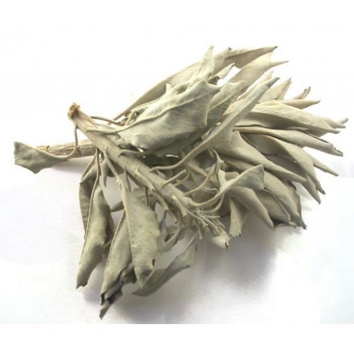
PARTS USED Dried leaves
TYPICAL PREPARATIONS The leaves as a tea, and the dried leaves on their stem as incense. Seldom found in cosmetic applications.
SUMMARY White sage grows only in the Southwestern part of the United States, and there is concern about its wildcrafting as its typical environs are taken over by human growth. In addition, a drought in 2002 seriously limited the crop of white sage, prompting many herbalists to suggest that enthusiasts consider growing their own. White sage has medicinal and ceremonial uses and is often burned as smudge sticks and in smudge pots.